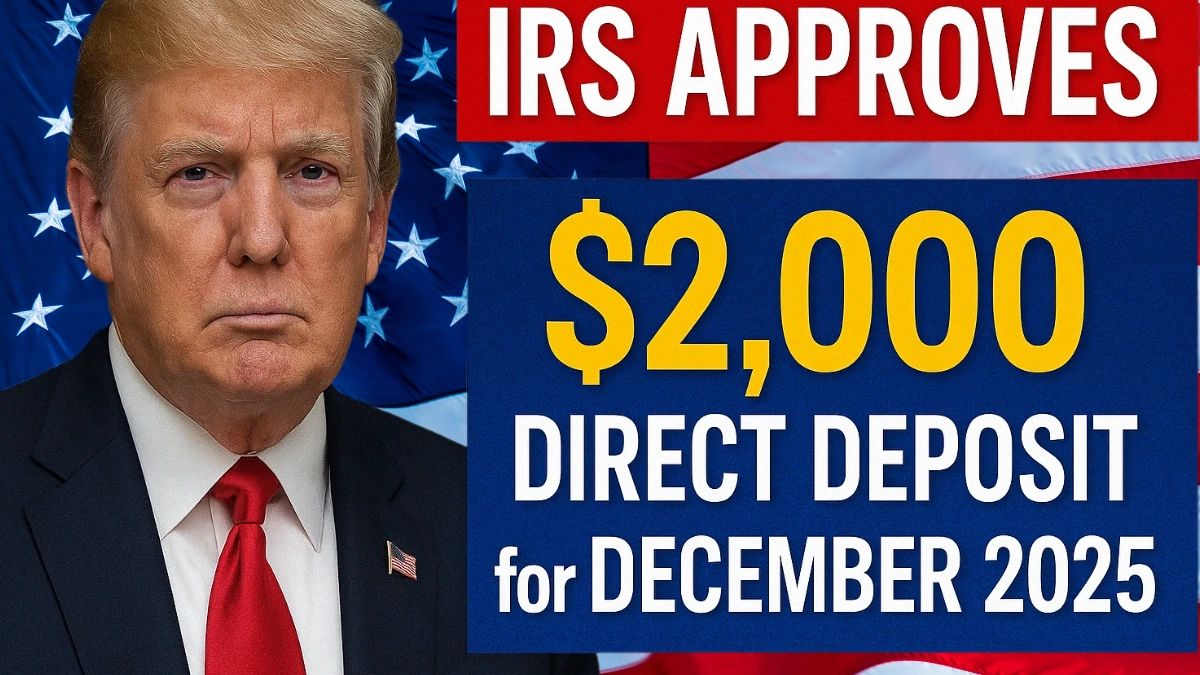
Millions of Americans are searching for answers after widespread reports claimed that the IRS has approved a $2,000 direct deposit scheduled for December 2025. With rising costs and families preparing for year-end expenses, the possibility of a large federal payment has created enormous interest. But what is actually confirmed, who might receive it, and how would the payment process work? Here is the latest, simplified for quick understanding.
Why the $2,000 Payment Is Being Discussed Nationwide
Talk of a $2,000 direct deposit began after the federal government signaled interest in returning tariff revenue to Americans in the form of a “tariff dividend.” The idea gained momentum after administration officials said they were actively exploring payment mechanisms to get money directly into Americans’ accounts. This sparked news coverage and social-media posts claiming the payment had already been approved. However, while the proposal is real, the IRS has not announced official payment instructions or confirmed December 2025 as the payout month.

| Detail | Latest Status |
|---|---|
| Payment Amount | $2,000 (proposed tariff dividend) |
| Payment Status | Not officially confirmed by IRS |
| Expected Recipients | Tax filers meeting future federal criteria |
| Payment Timing | December 2025 (rumored, not finalized) |
Has the IRS Officially Approved the $2,000 Direct Deposit?
As of now, the IRS has not issued a final approval notice, payment schedule, or guidance. For any federal cash transfer program to be paid through the IRS, the Treasury Department must authorize the funds and publish official instructions for eligibility, distribution, and tax treatment. Until that happens, the $2,000 payment remains a developing proposal, not an official benefit. Beneficiaries should rely only on IRS.gov or Treasury releases for confirmation.
Who Would Likely Qualify If the Payment Is Approved?
If the federal government finalizes the plan, eligibility would likely mirror past nationwide payments. That typically includes individuals who filed recent tax returns, meet citizenship or residency criteria, and fall within approved income ranges. Higher-income households may see reduced or phased-out benefits. Social Security, SSI, SSDI, and VA beneficiaries could also be included if the IRS uses its standard non-filer database. However, no eligibility list is official yet, and all details remain speculative until federal guidance is published.

Expected Payment Dates and Distribution Method
The rumored payment date of December 2025 comes from the administration’s desire to deliver support before the new year. If approved, the IRS would deposit funds using the same banking details taxpayers provided on their most recent tax return. Those without direct deposit would receive paper checks or prepaid debit cards. Exact dates would be announced publicly, along with tracking options through online IRS accounts. It is important to note that no payment calendar has been released.
How to Make Sure You Receive the Payment If It Becomes Official
To avoid delays, taxpayers should ensure their mailing address, direct deposit information, and filing records are up to date with the IRS. Creating an IRS online account allows individuals to check tax transcripts, confirm details, and track future payments. The IRS will never send texts or calls asking for bank information to “release” a payment; all updates will be posted on official government sites.

Claim Process If You’re Missed or Underpaid
If a $2,000 direct deposit program becomes official and someone eligible does not receive the payment, the IRS typically allows taxpayers to claim missing benefits through their next tax return. This process mirrors how Americans claimed missed stimulus checks in prior years. Again, this is only relevant if the program receives final federal approval.
Conclusion:
The $2,000 direct deposit circulating across news and social media is based on a legitimate federal proposal but is not yet confirmed by the IRS. Eligibility rules, payment dates, and filing requirements will only become official once the Treasury and IRS publish formal guidance. Until then, Americans should stay informed through verified government channels and avoid misinformation online.

Disclaimer: This article summarizes current public discussions and proposals. No federal payment is official unless confirmed by the IRS or the U.S. Treasury.