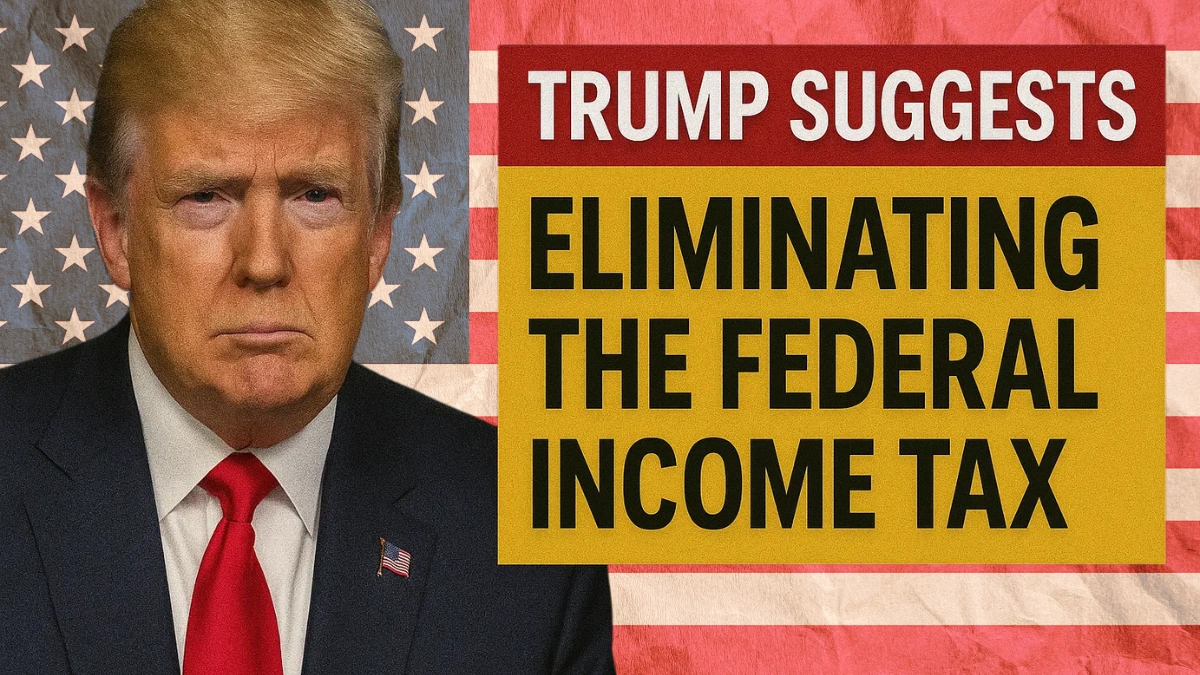
A major political shockwave hit the nation after President Donald Trump publicly suggested that the United States could eventually eliminate federal income tax altogether. According to Trump, rapidly growing tariff revenues could replace the need for traditional income taxes, a proposal that would dramatically affect workers, families, businesses, and the structure of the U.S. economy. The idea has sparked intense nationwide debate, with supporters calling it bold and transformative while economists warn of deep financial risks.
Trump’s Proposal and Why It Is Making Headlines
During recent remarks, Trump hinted that Americans may soon see a system where income tax plays a far smaller role, or disappears entirely for many households. His comment that “in the not-too-distant future you won’t even have income tax to pay” quickly gained national attention. Trump argues that increased tariffs on imports could generate enough money to fund the federal government without relying on personal income taxes. He also signaled that middle-class families could see “substantial or almost complete removal” of income-tax obligations in the coming years.

| Topic | What Trump Suggests |
|---|---|
| Federal Income Tax | Could be reduced or removed entirely |
| Replacement Source | Tariff revenue from imported goods |
| Impact on Workers | Higher take-home pay but possible rise in consumer prices |
| Economic Concerns | Revenue shortfalls and inflation risks |
How Eliminating Income Tax Would Affect Millions of Workers
If federal income tax were removed, millions of Americans would immediately see a significant increase in take-home pay. Workers earning under $200,000 a year would feel the biggest boost because their tax burden would shrink the most. For households living paycheck to paycheck, this could deliver meaningful financial relief. However, experts warn that the benefits may not be as simple as they appear. Because tariffs often translate into higher prices for imported goods, everyday items like electronics, appliances, clothing, and vehicles could become more expensive.
Why Economists Are Warning About Revenue Gaps
Federal income tax is currently the largest single revenue source for the U.S. government. Replacing it with tariffs alone may not bring in enough money to fund defense, health programs, Social Security, infrastructure, and federal services. Analysts caution that relying heavily on tariffs could create unpredictable revenue streams, especially if consumer demand slows or other countries retaliate with trade barriers. A sudden drop in imports would cause government revenue to shrink dramatically.

Could Tariffs Replace a Major Tax System?
The central question is whether tariff income can realistically support a government as large as the United States. Experts say the numbers do not add up. Tariffs traditionally raise prices and reduce import demand, which can shrink the revenue they generate over time. For low- and middle-income households, this effect could feel like a hidden tax in the form of higher everyday costs. Supporters argue that a redesigned tariff system could rebalance America’s economy and strengthen domestic manufacturing, but economists call the plan risky and potentially inflationary.
What the Proposal Means for Consumers and the Economy
If the U.S. eliminates income tax, the economic landscape would shift overnight. Workers would have more income in their paychecks, but increased tariffs might make essential goods costlier. Businesses that rely on imported materials would face higher expenses, potentially passing those costs to consumers. Retirement programs and federal agencies could face funding challenges unless Congress approves alternative revenue sources. The long-term impact depends on how the tax system is redesigned and whether tariff revenue remains stable.

Where the Plan Stands and What Happens Next
At the moment, Trump’s suggestion is not a formal policy. No bill has been introduced in Congress and no structural tax changes are underway. The comments represent a potential direction for future tax reform, but any attempt to eliminate income taxes would require major legislative action and bipartisan support. For now, the U.S. tax system remains unchanged, but the proposal has opened a national conversation about how America funds its government.
Conclusion:
Trump’s suggestion to eliminate federal income tax is one of the most dramatic tax ideas in decades. While it promises higher take-home pay for workers, it also raises concerns about inflation, revenue stability, and the rising cost of imported goods. The proposal is far from becoming law, but it has already reshaped discussions about taxes, tariffs, and the future of the U.S. economy. As the debate grows, Americans will be watching closely to see whether this bold vision becomes a real policy shift.

Disclaimer: This article is based on publicly available statements, economic analysis, and general policy discussions. Official legislation or confirmed tax-system changes have not yet been announced.