
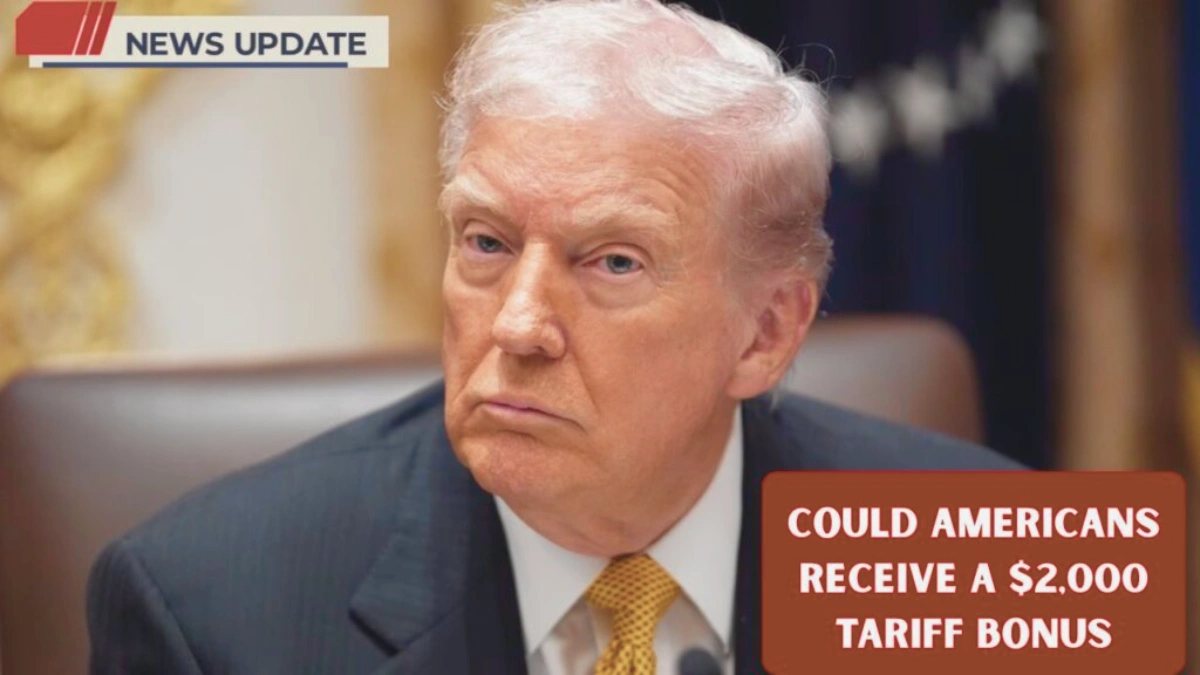
A new economic idea is gaining national attention as discussions intensify around a potential $2,000 “tariff bonus” payment for American households. The proposal, linked to tariff revenue collected from imported goods, is reportedly being explored as part of broader economic and trade policy plans. While no official federal program has been approved, the concept has generated excitement, confusion, and debate across social media and financial circles.
Where the Idea of a $2,000 Tariff Bonus Came From
The concept gained momentum after reports suggested that the administration was evaluating ways to return tariff revenue directly to American households. Supporters argue that tariffs generate billions in federal revenue, and a portion could be redistributed as a “dividend” or “bonus” to offset rising prices. This idea mirrors past discussions about using trade-generated income to support working families.
At this stage, it remains an exploratory policy, not an enacted program.

| Category | Current Status |
|---|---|
| $2,000 Tariff Bonus | Proposal under consideration, not approved |
| Who Would Qualify | Possibly all taxpayers or income-based groups |
| Funding Source | Tariff revenues from imports |
| Federal Approval | Not yet passed by Congress |
How a Tariff Bonus Could Theoretically Work
Under the proposal, the federal government would collect tariffs from imported goods—such as electronics, steel, furniture, and automotive parts—and channel part of that revenue into direct payments to Americans. The payment amount being discussed is up to $2,000 per eligible household, though specifics on income thresholds or family size have not been defined.
If approved, the IRS would likely distribute the money through direct deposit, similar to past stimulus payments.
Who Might Qualify for the $2,000 Payment
Because no official framework exists yet, eligibility details remain speculative. Some drafts suggest the bonus could apply to all tax filers, while other versions propose focusing on low- and middle-income families. Similar to previous relief programs, eligibility may also depend on filing status, household income, and residency requirements.

Until legislation is formally introduced, qualification guidelines remain unclear.
No Official Payment Dates or IRS Schedule Yet
Despite claims circulating online, the IRS has not announced any payment dates for a tariff bonus. Any such program would require:
congressional approval, funding authorization, and IRS implementation guidance. Without these steps, no direct deposit timeline exists. Viral posts mentioning December, January, or mid-year payment dates are incorrect.
A real payment schedule cannot be created until a law is passed.

Why the Proposal Is Gaining Attention Now
The idea comes at a time when many Americans are struggling with elevated grocery prices, higher housing costs, and overall inflation pressure. A $2,000 tariff bonus could act as a form of economic relief without increasing federal deficits, since it relies on tariff revenue already being collected. Politically, the proposal could appeal to voters seeking immediate financial improvement.
Economic analysts caution that tariff policies often increase consumer prices, creating mixed effects.
Potential Challenges the Tariff Bonus Faces
Even if proposed, the plan must pass several hurdles before becoming reality. Congress would need to approve the redistribution of tariff revenue, which is currently used to support federal operations. Economists warn that depending too heavily on tariff income could lead to price increases or trade retaliation from other nations.

The proposal sparks debate between supporters of direct relief and critics of trade-based policy shifts.
What Americans Should Do Right Now
Since the $2,000 tariff bonus is not an approved program, Americans should avoid assuming a check is coming or relying on viral headlines. The safest approach is to monitor official IRS announcements, White House statements, and congressional updates. Any real program will be formally announced through verified federal channels—not social media speculation.
Until then, the tariff bonus remains a developing idea, not a guaranteed payment.

Conclusion:
The possibility of a $2,000 tariff bonus has captured public attention, but it remains only a proposal under consideration, not an approved federal payment. While the idea aims to support households using tariff revenue, it lacks congressional authorization, IRS guidelines, or a distribution plan. If the administration pursues the concept further, official details will likely emerge in the coming months.
Disclaimer: This article is based on policy discussions, economic proposals, and public reporting. No official stimulus or tariff dividend program has been enacted at this time.