
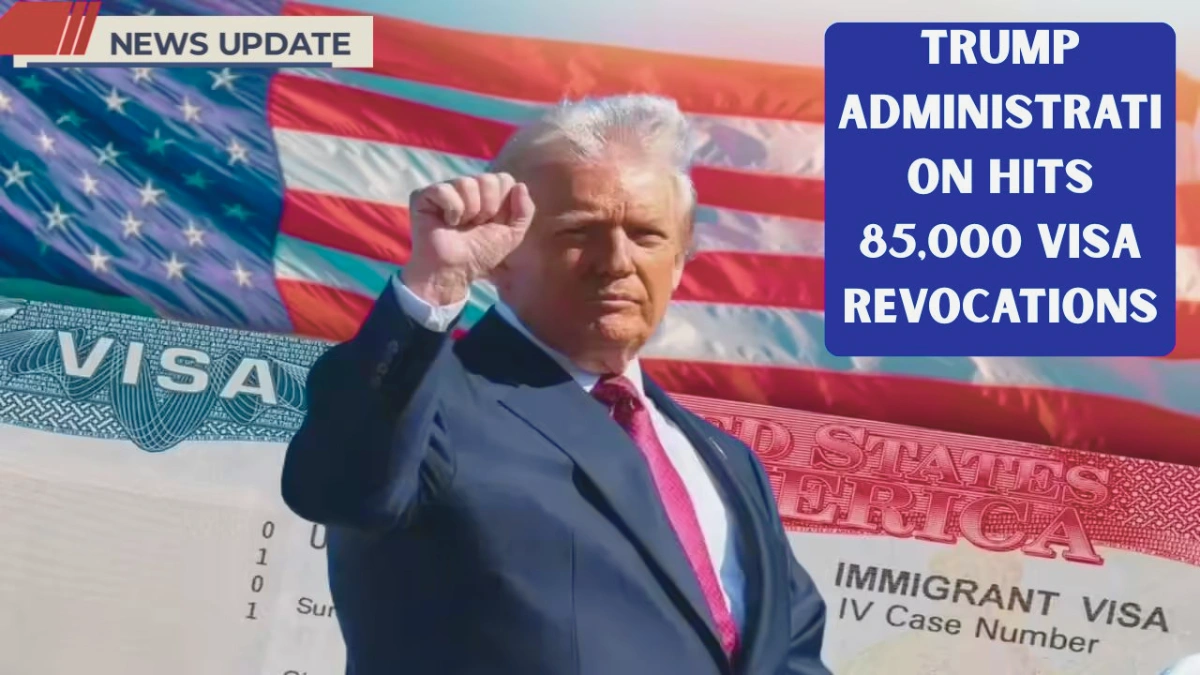
The Trump administration has carried out one of the largest visa crackdowns in recent years, revoking nearly 85,000 visas since January, according to newly released government data. The sharp increase reflects a major shift in immigration enforcement, with officials citing expanded background checks, security concerns, and criminal-related violations as key drivers. The move has impacted students, workers, tourists, and long-term visa holders across the United States.
A Sharp Rise in Visa Revocations Signals Tougher Policies
Government data reveals that visa revocations have more than doubled compared to the previous year. Officials state that nearly half of all cancellations stem from criminal offenses such as DUI, assault, or theft. Expanded federal screening under the Trump administration has resulted in aggressive reviews of visa holders, leading to revocations even for older or non-violent infractions.
The administration says the goal is improving national security, but critics argue the approach is overly broad and disruptive.

| Category | Latest Findings |
|---|---|
| Total Visas Revoked | Nearly 85,000 in 2025 |
| Student Visas | Over 8,000 cancellations |
| Main Reasons | Criminal violations, security checks, non-compliance |
| Impacted Groups | Students, workers, travelers, employers |
Student Visa Crackdown Hits Campuses Across the Country
More than 8,000 international students have reportedly lost their visas since January, causing significant concern among universities and academic institutions. Some cancellations were tied to criminal violations, while others were connected to immigration rule breaches or participation in political demonstrations. Several colleges have reported sudden withdrawals, incomplete semesters, and disrupted research projects due to unexpected visa terminations.
This marks one of the most aggressive student-visa crackdowns in recent memory.
Work Visa and Travel Visa Holders Also Face Higher Scrutiny
Beyond academic visas, thousands of work and travel visas have also been revoked. Officials say enhanced data-sharing between federal agencies has allowed them to flag more cases of non-compliance or security risk. Employers sponsoring foreign workers are facing delays, unexpected status reviews, and sudden workforce disruptions.

Many routine travelers have also reported revocations linked to incomplete documentation, overstays, or previous legal issues.
Expanded Background Checks Changing the Visa Landscape
Under the administration’s updated vetting system, visa holders undergo recurrent security screening rather than one-time checks. This means violations that occur after a visa is issued can lead to immediate cancellation. Authorities say this approach is meant to protect national security, but immigration experts warn it creates unpredictable outcomes for lawful visitors.
The policy shift represents a long-term change in how the U.S. manages foreign entry and residency.
Community and Economic Impact of Mass Visa Revocations
The revocations have had ripple effects on universities, companies, and families. Colleges report lost tuition revenue and stalled international programs. Employers describe challenges filling specialized roles and retaining international talent. Families of revoked visa holders have faced abrupt relocations, financial instability, and uncertainty about future reentry into the U.S.
These effects highlight how deeply visa policy changes can influence communities and industries.
Criticism and Legal Challenges Begin to Mount
Immigration advocacy groups and civil-rights organizations have begun challenging the scale of the revocations. They argue that the administration is using overly broad criteria and insufficient transparency. Some cases have led to legal appeals, especially where individuals claim they were unaware of the allegations behind their visa cancellation.

The coming months may see a rise in lawsuits and political debates surrounding the new enforcement strategy.
What This Means for Current Visa Holders
Experts recommend that current visa holders maintain strict compliance with all visa conditions. Even minor legal issues or administrative errors may now trigger review. Students, workers, and travelers are advised to keep documentation updated and understand the rules tied to their visa category as screening becomes more continuous.
The shift represents a new era of monitoring and accountability in U.S. immigration policy.
Conclusion:
The Trump administration’s revocation of 85,000 visas since January underscores one of the most significant policy changes in immigration enforcement in years. With expanded screening, increased scrutiny of students and workers, and a higher emphasis on security vetting, the U.S. visa system is experiencing a profound transformation. While officials argue the move strengthens national security, its impact on education, business, and international mobility will continue to unfold throughout the year.
Disclaimer: This article is based on data from government reports and major news sources. Visa policies may evolve as federal announcements are updated.