
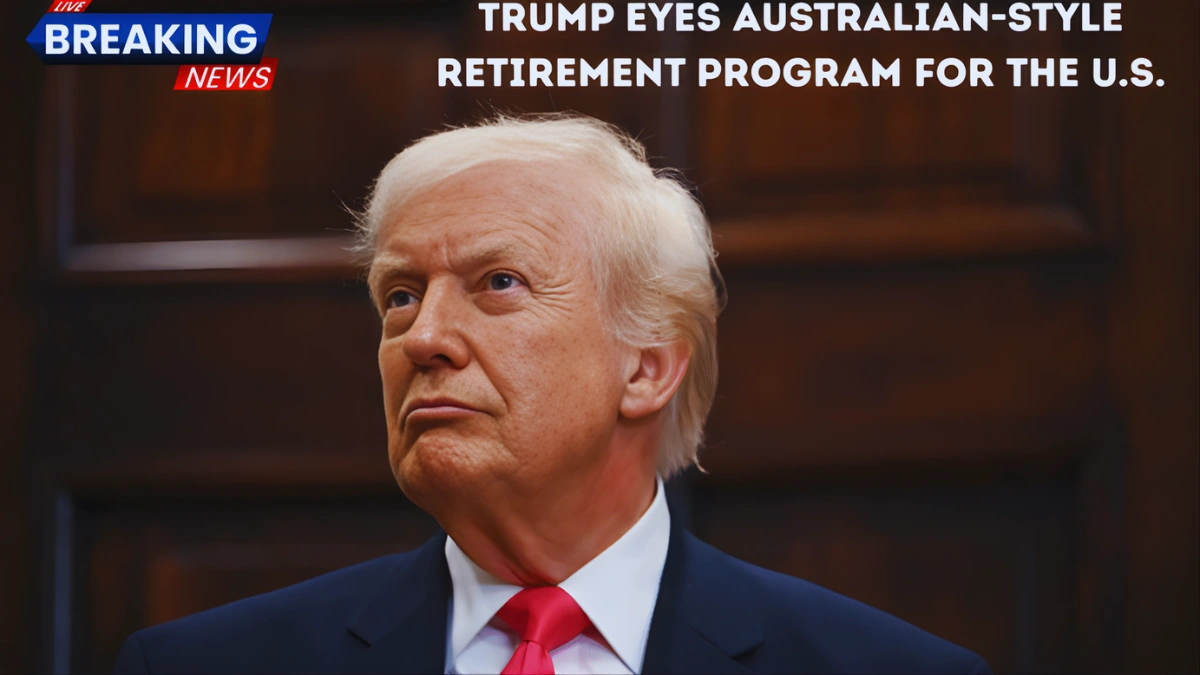
A major policy discussion is gaining momentum as former President Donald Trump signals interest in adopting an Australian-style retirement program for the United States. The idea has generated strong curiosity because Australia’s system is widely considered one of the most financially stable retirement models in the world. But how would such a system work in the U.S., and what changes could it bring to Social Security, pensions, and long-term savings?
Why Trump Is Interested in the Australian Retirement System
Australia’s retirement model, known as the Superannuation System, is praised for reducing pressure on government pension budgets while helping citizens build large personal retirement accounts. With Social Security facing long-term funding challenges, Trump’s interest reflects an effort to explore models that shift more responsibility—and more benefits—to workers and employers rather than the federal government alone.
The idea is gaining traction because it blends personal savings, employer contributions, and government support.

| Category | Australian Model Feature | Possible U.S. Impact |
|---|---|---|
| Mandatory Savings | Workers must contribute to “Superannuation” | Forced retirement savings for all workers |
| Employer Contribution | 11% of salary paid by employers | Higher employer-based retirement funding |
| Government Support | Age Pension for low-income seniors | Safety net alongside private savings |
| Investment Growth | Market-based long-term investing | Larger retirement balances over time |
How Australia’s Superannuation System Actually Works
In Australia, employers must contribute a fixed percentage of a worker’s income into a retirement account called a Super Fund. Employees may also voluntarily contribute more. These funds are invested across diversified markets, allowing workers’ savings to grow significantly over their careers. By age 67, many Australians retire with substantial balances, reducing reliance on government pensions.
It is essentially a mandatory, market-driven savings structure built for long-term growth.
What a U.S. Version of the Program Might Look Like
If the U.S. adopted an Australian-style retirement system, employers could be required to contribute a percentage of every worker’s paycheck into a private retirement fund. Workers might be encouraged—or required—to contribute as well, similar to 401(k) plans but universal and mandatory. Social Security would likely remain in place but may shift toward a smaller safety-net role rather than the primary retirement income source.

The goal would be to build larger individual nest eggs while reducing strain on Social Security.
How This Model Could Affect Social Security
A transition to an Australian-style model would not eliminate Social Security, but it could change how benefits are funded and distributed. Younger workers may rely more on personal accounts, while Social Security supports lower-income seniors and those unable to save enough. For retirees already collecting benefits, little immediate change would occur.
Over time, the government’s financial load could shrink as more Americans build private retirement wealth.

Potential Benefits for American Workers
Supporters argue that a mandatory savings system would ensure that every American, regardless of job type, builds a retirement account throughout their working life. Investment-based growth could lead to significantly higher retirement balances than Social Security currently provides. Workers would also have more control over their own funds rather than relying solely on government programs.
Greater financial independence is one of the key advantages cited by economists.
Challenges and Concerns With Adopting the Model
Critics warn that shifting to an Australian system requires careful planning to avoid burdening low-income workers or small businesses. Mandatory contributions could raise labor costs and affect take-home pay. Market volatility also raises concerns—retirement outcomes would depend on investment performance. Funding the transition for current retirees is another major challenge.

A change of this scale would require years of phased implementation.
Could This Actually Happen in the U.S.?
While the idea is generating attention, transforming the U.S. retirement system would require bipartisan support and major legislation. Social Security is deeply embedded in American life, making any overhaul politically sensitive. Still, rising concerns about Social Security’s long-term solvency keep the conversation alive, and Trump’s interest has put a spotlight on alternative retirement models.
Whether the U.S. adopts a full or partial version of Australia’s system remains to be seen.

Conclusion: Trump’s interest in an Australian-style retirement program has sparked a national conversation about the future of Social Security and American retirement planning. The Australian model emphasizes mandatory savings, employer contributions, and investment-based growth—features that could reshape how Americans prepare for retirement. While the idea is far from becoming policy, understanding how such a system works helps highlight both the opportunities and challenges ahead.
Disclaimer: This article is based on public statements, policy discussions, and the structure of Australia’s retirement system. No formal proposal has been introduced, and any future U.S. retirement reforms would require extensive legislative action.